Modern Visual Appeals: Contemporary Styles for Interlocking Sidewalk Paving Installment
@alexisdzfx611
October 24, 2026 · 17 min read
Interlocking pavers have matured from totally useful modules into a language of room, rhythm, and structure. Walkways no more function as thin strips from visual to door, they mount growings, draw the eye across the exterior, and signal just how a property intends to be made use of. Contemporary design leans on tidy geometry, restrained palettes, and crisp sides, yet the setups that mature well are those that appreciate local environment, workload, and the realities of maintenance. After twenty years laying concrete, clay, and stone across coastal humidity, high-desert freeze cycles, and suburban clay dirts, I have an easy regulation: the modern look begins under the surface, after that travels up via proportion, shade, and detail.
What provides a sidewalk a modern feel
Contemporary paving is much less concerning chasing fads and even more regarding editing. Large-format systems, narrow joint lines, and regular appearances review as modern. The patterning favors simple bonds and direct circulation as opposed to active mosaics. Shade alters neutral with thoroughly put contrasts. https://sp-n8w4ee.hyperping.app/ Lights is silent and integrated, not decorative. Sides are straight and sharp, or with dignity radiused with vast distances that really feel intentional rather than picky. The surface requires to be flat and true, with changes that really feel inevitable underfoot.
These concepts can be supplied with different materials, but they all request for accurate design and a regimented base. A contemporary pathway that splashes or telegrams every joint will certainly never look modern-day, despite exactly how pricey the paver.
Material options that sustain modern-day aesthetics
Concrete pavers still control for Pathway Paving Setup since they incorporate regular sizing with a range of surfaces. Manufacturers currently press through-body pigments that hold shade far better than surface therapies from a decade earlier. For a crisp, urban appearance, smooth-faced or light shot-blast appearances in charcoal, trendy grey, or beige work well. If the website heats up in summer sun, prevent big areas of deep charcoal near glass or south-facing exteriors, as it will certainly surge surface area temperatures and can print warm into interiors.
Clay pavers deliver exceptional colorfastness, however their component size and diagonal edges steer them towards traditional looks. A slim-format clay plank, embeded in a running bond with limited joints, can still really feel modern-day, specifically in deep reds or browns that enhance black-framed home windows. Clay's strength-to-thickness proportion is high, yet uniformity can vary somewhat by batch. Draw from numerous cubes and dry lay a few courses to make sure the tone distribution fits the design.
Natural rock jobs a peaceful luxury. Thermal bluestone, flamed basalt, and sawn limestone in rectangle-shaped modules fit contemporary areas when the pattern is restrained. Rock introduces natural tone variation that softens the austerity of modern architecture. If you go this path, utilize sawn sides for tight joints and prepare for sealing on lighter limestones that tarnish easily near planters or outside kitchens. Remember that some limestones are not frost pleasant, so check absorption prices and freeze-thaw rankings from a respectable lawn, not simply a catalog snippet.
Porcelain pavers have become a strong challenger in the last five to 8 years. Their advantages are dimensional precision, discolor resistance, and a huge surface style collection. On stand systems or absorptive bases they shine, but for a standard sand-set Walkway Paving Installation in a freeze area, you require conscientious bedding and compaction to sustain the edges. Porcelain systems are usually 20 mm thick, so they do not bridge gaps well. If you choose porcelain, devote to a zero-tolerance base, polymeric joint sand matched to the manufacturer's specification, and mindful side restraint.
Scale, percentage, and pattern
The relocate to bigger devices has actually defined contemporary paving, but size needs to comply with context. A 24 by 36 inch paver on a five-foot-wide course gives lovely tempo, yet on a three-foot yard run it can really feel cramped when reduced to bits along the side. On tiny pathways, blended rectangular shapes within an established modular family maintain joints lined up and cuts charitable. A 12 by 24 combined with 24 by 24, or a trio like 12 by 24, 24 by 24, 24 by 36, generates make-up without visual noise.
Patterns that read modern are basic. Running bond extends the area and sets well with plant beds. Stack bond really feels spare and architectural, yet it requires an extremely flat base to prevent the least lippage telegraming a grid. Herringbone is solid structurally and can really feel current when applied with lengthened plank units and a slim joint. Prevent mixed-in curved fans unless you are purposely pricing quote standard European roads, which can clash with a modern facade.
The joint itself is a design aspect. Contemporary work relies on limited joints with angular bedding sand to lock interlocks. Aim for 2 to 4 millimeters where the paver's spacer lugs permit it. Wider joints can still look modern-day if they are consistent, yet after that they have to read as an aware groove, not a sloppy gap.
The base is the aesthetic
A flat, well-drained, load-bearing base makes or damages the look. The general public sees the tops, but the eye reads the straightness of lines, the absence of droops, and the consistency of light across the airplane, all born below the surface area. Every installer has a story about an attractive pathway that developed a 3 millimeter dip at year 2 where watering cried into a joint. That is not simply an efficiency failing, it is a visual one.
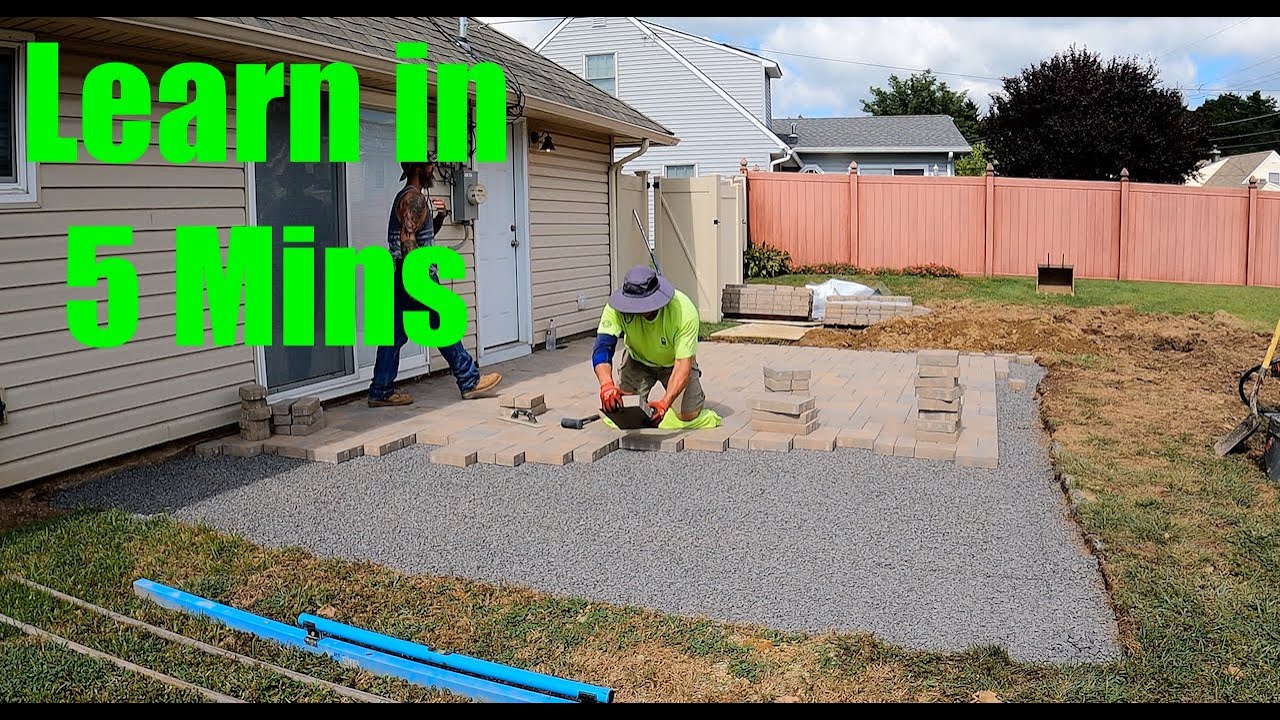
For normal pedestrian Pathway Paving Setup on well-drained soil, a compressed accumulation base of 4 to 6 inches, tipped much deeper at edges, is my standard. In clay soils or where freeze-thaw is significant, push this to 8 inches and include a woven geotextile to keep fines from pumping into the base. The bedding layer stays a 1 inch screeded program of concrete sand or high-performance bed linens product that stands up to movement. Screed with rigid rails and do not walk on the ready bed. If you disrupt it, rake and re-screed, or else you invite lippage or shaking units.
Driveway Paving Installment includes a different lots account. Even if your purpose is continuity, with a walk curving into the driveway in matching coatings, upgrade the driveway base to 8 to 12 inches of compressed accumulation and think about pavers with a minimum 80 mm thickness in snow country where plows will see. On the walkway parts anticipated to lug periodic carts or little devices, the standard 60 mm paver suffices when basework is honest.
Edging that goes away, or accents with intention
Modern sides need to either disappear or stand as a deliberate expose. Concrete curbs poured versus the side and finished flush with the paver tops will limit the field without screaming. For a lighter touch, hidden plastic or light weight aluminum side restrictions laid tight at 45 levels hold lines without aesthetic disturbance. Where the side is a style feature, use a soldier training course in a different tone, yet keep the comparison subtle. Charcoal against mid gray, sand versus taupe. Two-shade schemes age much better than three or four, which tend to really feel hectic once the plantings mature.
Metal sides, especially powder-coated steel with a slim profile, offer a sharp shift to planted beds. They also assist keep mulch from migrating into joints. Mind the thermal movement, risk spacing, and corrosion rating for your environment. Uncoated moderate steel patinates to a warm brown within months in seaside humidity, which might or might not suit the architecture.
Color method with remaining power
Contemporary color pattern reside in neutrals, but that is not an excuse for monotony. In extreme sunlight, pure whites can glow and show tire scuffs and tannin leaks. Deep charcoals chef and print salt marks. I get to most often for mid grays with a trendy undertone, or combined coatings that present a touch of variegation to conceal dirt and plant pollen. Where the website is heavily decayed, warmer grays soften the shift to soil and bark. For south-facing access, a two-tone area with arbitrarily dispersed accent systems at a reduced proportion, one in 8 or one in 10, can include activity without damaging the modern-day line.
Pull samples onto website and wet them, after that assess early morning and mid-day. Color moves with light quality. Do not trust the display room. On one hill job, a sedimentary rock that reviewed neutral under fluorescent store lights shifted eco-friendly versus the customer's repainted stucco. A two-hour, on-site mockup avoided an expensive return.
Joints, sands, and stabilization
Polymeric sands have boosted, yet they still demand tidy installment. Utilize a jointing sand that matches the paver's advised rank and shade. After brushing up, shake with a safety pad to seat the sand deeply. Sweep clean, shake once more, then use a leaf blower held high to lift recurring dust off the surface area prior to misting. Overwatering laundries binders into pores, which shows most on smooth or gently distinctive pavers. Underwatering leaves weak joints that erode under wind or irrigation.
In absorptive styles where the contemporary purpose is continuous surface with covert stormwater function, joint infill gravel changes sand. Be reasonable concerning sweeping and weed seeds. Absorptive joints look neat when maintained, but they gather organics. A seasonal vacuum sweep maintains them sharp.
Lighting, hardware, and the night view
Contemporary walks take advantage of low-output, cozy white lights that forages surfaces rather than highlighting them. Step lights recessed into adjacent wall surfaces or reduced bollards with secured optics stay clear of glow. Integrated paver lights exist, however they take the chance of looking dotty if overused. I favor undercap lighting at seatwalls or risers, which checks out as a radiance along the edge.
Hardware consists of house numbers, mailbox stands, and gateway locks that sit near the path. Straightforward black or brushed stainless with very little ornament maintains the appearance coherent. Strategy wire runs and junction boxes prior to base prep. Absolutely nothing dates a sidewalk faster than saw cuts or drilled cores added later on to go after wiring.
Curves in a contemporary vocabulary
Straight lines control, but curves have a place when they are generous and consistent. A six-foot distance really feels as well limited for large-format units and pressures wedges that destroy the modern-day line. Go for distances a minimum of ten to twelve feet for main moves. Segmental cuts can review as a faceted curve if spacing is limited and cuts are identical. Where a bent path fulfills straight limits, straighten a pile bond or soldier side at the landing, then feather the contour back into the area so the transition feels intentional.
Accessibility, convenience, and cadence
Modern appearances ought to not come with the cost of convenience or access. Sidewalks need to feel inviting at an all-natural gait. A useful width for a household front stroll is 4 feet, yet five feet offers a much better passing away room and looks right against bigger frontages. Cross slopes must sit around 1.5 to 2 percent to lose water without pushing the pedestrian away. Where a course will offer a wheelchair, keep slopes regular and landings degree. Surface appearance should stabilize grip and level of smoothness. Smooth-faced pavers read clean, but in frost-prone areas, a light appearance lowers slip on March early mornings when a clear sky hides a movie of ice.
Joints need to be flush, with lippage held under 3 millimeters, and ideally much less. This solitary metric does more for a modern appearance than any kind of shade option. You can feel poor tolerances also when you can not see them. Establish a straightedge across the surface at numerous positionings during set up. It removes the guesswork.
Integrating growing, furniture, and water
A contemporary walkway hardly ever lives alone. Planters, benches, and water catchment all join the look. A slim steel-edged crushed rock strip along one side can soak roofing system drainage and break the mass of pavers. A built-in bench at a turn provides a time out without visual mess. If the design includes grass beside the walk, recess the paver side by a half inch and set a tough steel mowing strip at the grass side. Turf will certainly sneak, and a neat band protects the modern-day edge.
Outdoor furniture near the walk must echo the paver geometry. Long, reduced benches line up with running bonds, rounded planters soften a raw grid. Keep range regular, a chair with slim legs set down on 24-inch squares feels lost.
Sustainability that reveals through design
Modern landscapes can, and should, manage water well. Absorptive interlocking concrete pavers take care of tornado paver driveway Walnut Creek occasions with a base created to store and infiltrate. In heavy clay, you can still produce underdrains that move water to daytime or a cistern. Even if the main field remains standard, design in crushed rock bands or discrete permeable panels at nadirs to catch problem drainage. Take into consideration lighter colors for warmth islands, or pair mid-tones with color trees to lower surface area temperature levels. If your region enables, resource accumulation from within 50 miles and seek pavers with recycled content, after that communicate that selection to the property owner in ordinary language instead of a plaque.
From driveway to door, one vocabulary
When Pathway Paving Setup ties right into Driveway Paving Setup, the shift issues. A typical method utilizes the same paver family members in different ranges. The driveway carries the heavier 80 mm system pattern in a running bond or herringbone for interlock toughness. The sidewalk then moves to larger components of the same face mix to learn more improved. Preserve a common color scheme to keep the residential or commercial property cohesive. Make use of a flush transition at the pathway crossing and remove vertical actions where feasible, which helps snow removal and accessibility.
On dead end residential or commercial properties where the driveway controls the front lawn, treat the pathway as a counterpoint. A direct stroll that departs the driveway at a crisp right angle, with a crushed rock or growing strip to break the masses, looks current and intentional.
Weather, snow, and de-icing realities
Modern surface areas show marks. Prepare for snow removal with rubber-tipped blades on pavers with smooth tops. If a service provider uses a steel blade in January, expect light scoring. Shiny porcelain will reveal it, thermal stone much less so. For de-icing, calcium magnesium acetate or magnesium chloride is gentler than rock salt on concrete and metal, though every chemical has compromises. Prevent ammonium-based items on concrete. In freeze areas with frequent thaws, a gently distinctive paver is a pal. I have actually seen smooth refined limestone walks come to be skating rinks under shade at 28 levels Fahrenheit, also when your home rested at 40.
Maintenance that safeguards the look
A modern-day visual counts on uniformity, which gets here with simple maintenance routines. An annual low-pressure laundry at 500 to 700 psi clears organics without combing joint sand. Re-sweep polymeric joints at three to five year periods, depending upon traffic and irrigation overspray. Sealers are optional. On concrete, passing through silane-siloxane products withstand staining without altering the sheen, and they preserve vapor permeability. Film-forming sealers can look plastic and enhance tire scuffs. If you do seal, test on offcuts first.
Weed control begins at the base with geotextile and proper side restriction. Seed startings will root in blown-in dust, not in the sand itself. A springtime walk with a brush and blower makes a larger difference than herbicide.
A quick spec list prior to you settle the design
- Soil problem recorded, with base thickness adjusted to website and climate
- Module sizes proportioned to path size, with cut strategy sketched
- Edge restriction selected to either vanish or intentionally frame
- Joint sand and stabilization technique matched to paver and exposure
- Lighting strategy collaborated with conduit and transformer locations
The on-site sequence that provides clean lines
- Excavate to the layout subgrade, proof roll, then maintain with geotextile if needed
- Place and small aggregate base in lifts no thicker than 3 inches, check slopes
- Screed a real 1 inch bedding layer, set stringlines, and stage pavers within reach
- Lay to pattern, maintain joints tight, cut with water-cooled saw, after that small with a pad
- Sweep and established joints, clean meticulously, mist per product specification, and verify edges
Real-world lessons and tiny options that matter
On a townhouse task, the customer wanted a slate-colored, stack-bond porcelain walk to match the steel stair stringers. The initial format ran the joints directly to the doorway, however it checked out as a grid pinned to a single prime focus. We rotated the modules nineteen levels to align with the residential or commercial property line and introduced a 6 inch gravel band along the block wall. The outcome really felt much more expansive and less literal, and the crushed rock band taken in sprinkling from the next-door neighbor's downspout. The price difference was minimal, yet the structure boosted dramatically.
Another work remained on large clay. The property owner had a background of hairline fractures in their concrete drive. We thickened the base under the stroll to 8 inches and switched over to an open-graded accumulation with a geotextile separator. The stroll stayed true after two winters that bent a neighbor's path. When spending plans are limited, invest in the unseen. A slim base with a costs paver is a false economy.
Small margins gather. A joint that differs from 2 to 6 millimeters looks careless also if each gap is technically within resistance. A soldier program that twists by a quarter inch ruins an otherwise tidy run. A compacted base that varies by a half inch will chase you the entire set up. One of the most modern-looking strolls I have actually seen were built by teams that reset rails when a stringline drifted and recut a rock twice to tighten up a corner instead of fill with slivers.
Where patterns are leaning next
Two instructions stand apart. Initially, extended slab pavers, frequently 6 by 24 or 8 by 32, laid in restrained patterns with very little shade variant. They elongate narrow side backyards and set well with upright cladding. Second, hybrid areas where a paver panel floats in a sea of great gravel or groundcover, divided by a neat steel side. The paver checks out as a platform, which is a solid modern-day gesture.
Finishes are softening. Rather than glossy or extremely distinctive tops, lightly combed or micro-textured surface areas are obtaining favor. Shades are sneaking warmer as black window frameworks satisfy timber soffits and bronze equipment. Charcoal is still solid, however it is tempered with mushroom and oat tones that borrow from Scandinavian palettes.
Bringing all of it together
A modern pathway is sincere geometry carried out with treatment. You can reach that result with several products and cost factors if you respect proportion, maintain the combination disciplined, and build a base that does the quiet work. Think through exactly how the path satisfies the driveway, where water will certainly go throughout an electrical storm, just how snow will be pressed in January, and what the surface will seem like under bare feet in June. Run your hand along the edge restriction prior to you hide it, examine the joints with a light in the evening, and do not be afraid to eliminate three programs to remedy a drift you can currently see.
For home owners evaluating Pathway Paving Installation or a full residential or commercial property change that includes Driveway Paving Installment, the modern visual is much less regarding the present magazine and more about selections that remain real years later on. Select components that fit the room, lines that lead someplace, and details that will look as excellent after the very first winter as they do on the day the broom notes disappear.